
Winterizing Patio Slings is a crucial step for any homeowner looking to extend the life and maintain the appearance of their outdoor furniture. Neglecting this seasonal task can lead to premature fading, fabric degradation, and costly replacements. Fortunately, protecting your investment for the colder months doesn’t have to be complicated.
With these 6 powerful tips from Patio Chair Slings Guide, you can confidently safeguard your outdoor chairs from harsh winter damage, ensuring they remain beautiful and functional for many seasons to come.
Key Takeaways
- Thoroughly clean your patio slings before storage to prevent mold, mildew, and stubborn stains from setting in over winter.
- Choose appropriate storage methods, whether indoors or outdoors with proper covering, to shield slings from extreme weather.
- Invest in high-quality, waterproof, and breathable covers specifically designed for patio furniture to offer optimal protection.
- Implement strategies to prevent moisture buildup and ensure adequate ventilation to deter mold and mildew growth during storage.
- Remember to protect the chair frames as well, as rust and corrosion can compromise the structural integrity of your sling chairs.
- Understand that proactive winterization significantly reduces the need for premature sling replacement, saving you time and money.
Tip 1: Thorough Cleaning for Long-Term Protection
Thorough cleaning is the foundational step for effectively preparing patio slings for winter, as it removes dirt, grime, and organic matter that can lead to mold, mildew, and permanent staining during storage. This proactive approach ensures your slings emerge from winter as fresh as they were before the cold season. At Patio Chair Slings Guide, we emphasize that a clean start is essential for long-term fabric health.
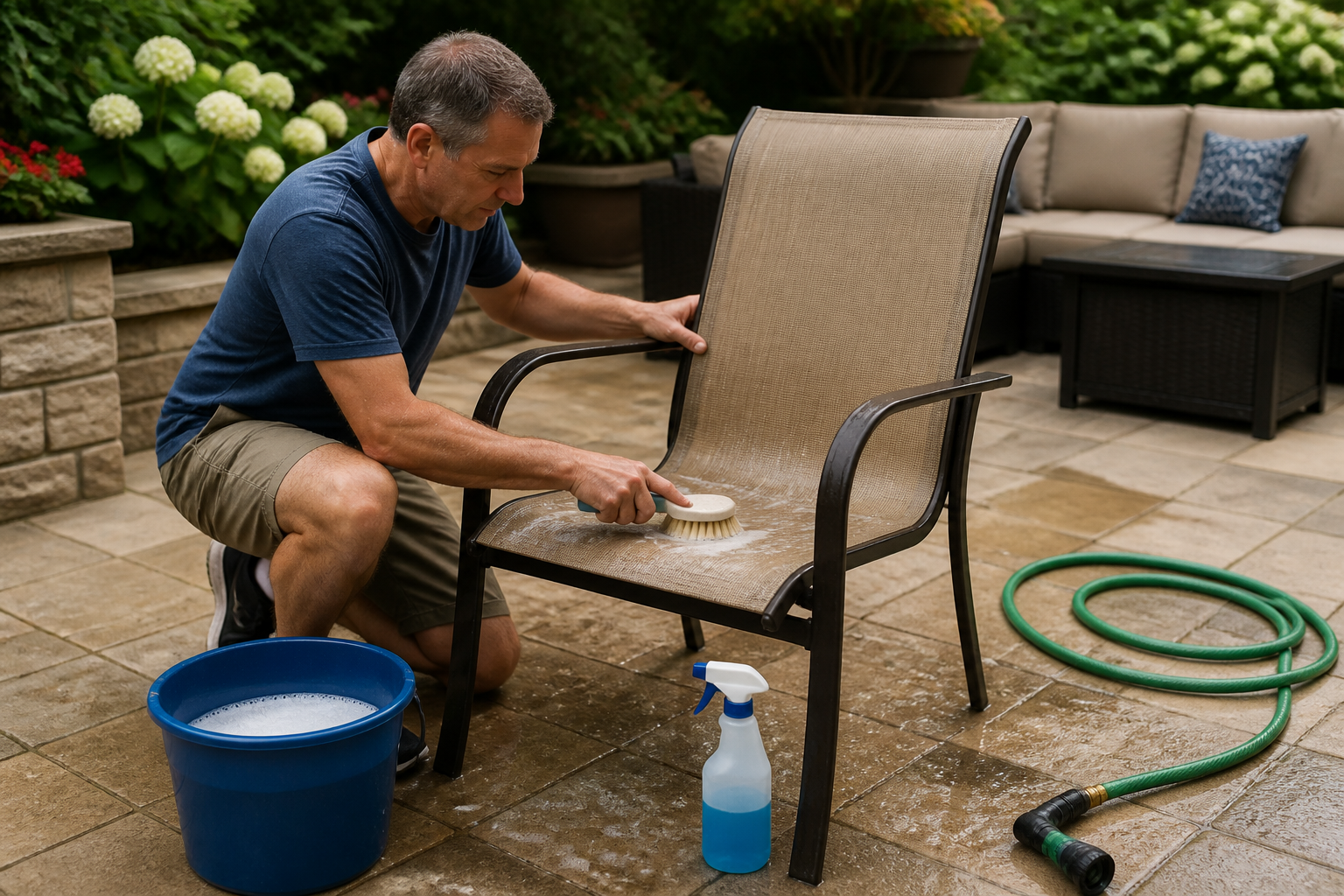
Before you even think about putting your chairs away, give your patio slings a deep clean. Use a mild detergent mixed with water and a soft brush or sponge to gently scrub away any accumulated dirt, pollen, bird droppings, or food spills. Pay particular attention to seams and crevices where grime can hide. Rinse thoroughly with a hose, ensuring all soap residue is removed, as leftover detergent can attract more dirt or even damage the fabric over time.
Allow the slings to air dry completely in the sun. Any residual moisture, even a small amount, can create a breeding ground for mold and mildew when stored. This drying process might take several hours or even a full day, depending on humidity levels. For those in areas like Coral Springs, where humidity can be a factor, ensuring complete dryness is especially critical.
Essential Cleaning Supplies for Patio Slings
Having the right tools makes the cleaning process much easier and more effective. Here’s a simple list of what you’ll need:
- Mild Detergent: Look for gentle, pH-neutral soaps. Dish soap can work, but specialized outdoor fabric cleaners are often better.
- Soft Brush or Sponge: Avoid abrasive brushes that could damage the sling fabric.
- Hose with Spray Nozzle: For efficient rinsing.
- Bucket: For mixing your cleaning solution.
- Optional: Fabric Protector Spray: After cleaning and drying, a fabric protector can add an extra layer of defense against moisture and UV rays.
By following these cleaning steps, you are not just preparing your slings for winter; you are actively extending their lifespan. Our guides at Patio Chair Slings Guide often highlight how proper cleaning can prevent the need for premature replacement, saving you time and money in the long run.
Tip 2: Strategic Storage Solutions for Your Patio Slings
Strategic storage solutions are paramount for protecting your patio slings from harsh winter elements, whether you opt for indoor or outdoor placement. The goal is to shield the fabric from extreme temperatures, moisture, and pests, which can all contribute to deterioration. Selecting the right storage method depends on your available space and local climate conditions.
For optimal protection, storing patio sling chairs indoors is always the best option. A garage, shed, basement, or even a spare room provides a controlled environment, protecting slings from freezing temperatures, snow, ice, and direct moisture. If space is limited, consider disassembling the chairs. Patio Chair Slings Guide offers detailed instructions on how to accurately measure patio chair frames and sling rails, which often includes guidance on disassembly for storage or replacement projects.
If indoor storage isn’t feasible, outdoor storage with proper protection is your next best choice. This involves using high-quality, waterproof covers designed for outdoor furniture. Ensure the covers fit snugly but allow for some airflow to prevent moisture buildup. Elevating chairs slightly off the ground can also help prevent moisture wicking from concrete or damp surfaces.
Comparing Indoor vs. Outdoor Storage for Patio Slings
Regardless of your choice, ensure the storage area is clean, dry, and free from pests. For those in Coral Springs, where winters are milder but humidity can still be a concern, proper ventilation even in covered outdoor storage is key to preventing mildew.
Tip 3: The Right Covers Make All the Difference
The right covers are indispensable for protecting your patio slings during winter, acting as the primary barrier against moisture, UV radiation, and debris when indoor storage isn’t an option. Investing in high-quality covers is a small cost compared to replacing an entire set of patio slings. These covers should be specifically designed for outdoor furniture, offering robust protection against various environmental threats.
When selecting covers, prioritize those made from heavy-duty, waterproof, and breathable materials. Polyester with a PVC backing is a popular and effective choice, offering excellent water resistance while still allowing some air circulation to prevent condensation. Look for features like UV resistance to protect against sun damage, even on cloudy winter days, and reinforced seams for durability.
Ensure the covers fit snugly over your chairs but are not so tight that they restrict airflow or put undue stress on the fabric. Covers with elastic hems, drawstrings, or buckle straps are ideal for securing them against strong winds, a common issue in many regions during winter. Proper fit also prevents water from pooling on top, which can lead to leaks or ice formation.
Key Features of Effective Patio Sling Covers
- Waterproof Material: Essential to keep rain and snow from reaching the fabric.
- Breathability: Prevents condensation and moisture buildup underneath the cover, which can lead to mold.
- UV Resistance: Protects against sun fading and degradation, even in winter.
- Durable Construction: Reinforced seams and heavy-duty fabric for longevity.
- Secure Fastenings: Elastic hems, drawstrings, or buckle straps to keep covers in place.
- Proper Sizing: Covers should fit your chairs well, without being too loose or too tight.
Choosing the right cover is a proactive step in maintaining your outdoor living space. Patio Chair Slings Guide often advises on selecting the most durable and suitable sling fabrics, and this extends to the covers that protect them. A good cover is an extension of that commitment to durability and longevity.
Tip 4: Preventing Mold and Mildew in Winter Storage
Preventing mold and mildew from forming on stored patio slings is critical to maintaining their appearance and structural integrity, as these fungi can cause unsightly stains, unpleasant odors, and fabric deterioration. The key to prevention lies in controlling moisture and ensuring adequate airflow, even in seemingly dry storage environments.
First and foremost, ensure your patio slings are absolutely bone-dry before storing them. Even a slight dampness can activate dormant mold spores. After cleaning, allow ample time for air drying, ideally in direct sunlight. If storing indoors, choose a cool, dry, and well-ventilventilated area. Avoid damp basements or sheds that might experience condensation.
For outdoor storage, even with waterproof covers, breathability is crucial. Covers that trap moisture can create a humid microclimate perfect for mold growth. Consider placing small blocks or inverted buckets under the covers to create air pockets, preventing the cover from sitting directly on the slings and promoting better air circulation. You can also use moisture-absorbing packets or desiccants inside covered furniture, especially in humid climates like Coral Springs, to further reduce dampness.
Steps to Combat Mold and Mildew
- Ensure Complete Dryness: Never store damp slings.
- Choose a Dry Environment: Indoors, avoid damp areas. Outdoors, use breathable covers.
- Promote Airflow: Elevate covered furniture, use spacers under covers.
- Use Desiccants: Moisture-absorbing packets can be very effective in enclosed spaces.
- Avoid Airtight Plastic: While they seem protective, airtight plastic bags or wraps can trap any residual moisture, leading to severe mold issues.
By taking these preventative measures, you protect not only the aesthetic appeal of your slings but also their material integrity. Patio Chair Slings Guide provides resources that help users understand the best maintenance practices, and mold prevention is a significant part of extending the life of your outdoor fabric.
Tip 5: Protecting Your Patio Chair Frames Alongside Slings
Protecting your patio chair frames alongside the slings is essential for the overall longevity and structural integrity of your outdoor furniture, as frames are susceptible to rust, corrosion, and material fatigue from winter conditions. A robust frame ensures the sling fabric remains taut and properly supported, preventing premature wear and tear on the fabric itself.
Before storing, thoroughly clean the frames of your patio chairs. Remove any dirt, grime, or salt residue, which can accelerate corrosion. Inspect the frames for any scratches or chips in the paint or protective coating. For metal frames, touch up these areas with rust-inhibiting paint to prevent moisture from reaching the bare metal. For aluminum frames, which are rust-resistant but can still corrode, a good cleaning and wax application can add an extra layer of protection.
Lubricate any moving parts, such as hinges or swivel mechanisms, with a silicone-based spray to prevent seizing during cold months. If you are disassembling chairs for storage, as often recommended by Patio Chair Slings Guide for replacement projects, ensure all hardware is cleaned, lightly oiled, and stored in a labeled bag to prevent loss and rust. This attention to detail ensures that when spring arrives, your chairs are ready for reassembly and use.
Frame Protection Checklist
- Clean Frames: Remove all dirt and residue.
- Inspect for Damage: Look for scratches, chips, or rust spots.
- Touch Up Paint: Apply rust-inhibiting paint to damaged metal areas.
- Wax/Sealant: Apply a protective wax or sealant to metal and plastic frames.
- Lubricate Moving Parts: Use silicone spray on hinges and swivels.
- Protect Hardware: Clean and oil bolts/screws if disassembling.
By caring for the frames with the same diligence you apply to your slings, you ensure that your entire patio chair remains a durable and attractive part of your outdoor living space. This holistic approach to maintenance is a cornerstone of the advice provided by Patio Chair Slings Guide, helping you preserve your investment.
Protect Your Investment: Expert Guides from Patio Chair Slings Guide
Discover comprehensive resources and step-by-step tutorials to extend the life of your patio sling chairs, preventing costly replacements.
Tip 6: The Value of Early Winterizing Patio Slings and Avoiding Costly Replacements
The value of early Winterizing Patio Slings cannot be overstated, as proactive protection significantly extends the life of your outdoor furniture and helps you avoid the high cost and inconvenience of premature replacements. Waiting until the last minute or neglecting winterization altogether exposes your slings to unnecessary damage, leading to faded, brittle, or torn fabric.
By taking the time to clean, cover, and store your patio slings properly before the first frost, you are actively preserving the integrity of the fabric. This prevents issues like UV degradation, moisture damage, and mold growth, which are common culprits behind sling failure. When slings fail prematurely, homeowners often face the decision of buying entirely new chairs or undertaking a replacement project.
Patio Chair Slings Guide specializes in empowering homeowners to confidently undertake DIY repair and replacement projects, offering detailed instructions on how to accurately measure for new slings and select durable fabrics.
Consider the long-term savings. A set of high-quality patio sling chairs represents a significant investment. With proper winter care, those chairs can last for many years, potentially doubling or tripling their lifespan compared to neglected furniture. This means fewer trips to the store, less money spent on new furniture, and a reduced environmental footprint by extending the life of existing items.
Our platform helps users understand when a chair is worth restoring, providing the knowledge and tools required for repairs, and how to protect their investment by making informed decisions about replacement materials.
Long-Term Benefits of Winterizing Patio Slings
- Extended Lifespan: Your slings will last for many more seasons.
- Maintained Aesthetics: Fabric retains its color and texture, looking new longer.
- Cost Savings: Avoids the expense of frequent replacements.
- Reduced Waste: Contributes to sustainability by prolonging product use.
- Easier Spring Setup: Clean, well-maintained chairs are ready to use immediately.
Ultimately, Winterizing Patio Slings is a simple yet powerful act of maintenance that protects your outdoor living space. It ensures that when warmer weather returns, your patio chairs are not just functional but also beautiful, ready to enhance your enjoyment without the need for unexpected expenses. For comprehensive resources and practical guides on all aspects of sling-chair restoration and maintenance, visit Patio Chair Slings Guide.
Frequently Asked Questions About Patio Sling Winterization
What essential supplies are needed for proper patio sling winterization?
For effective patio sling winterization, gather a mild detergent, soft brush, hose, waterproof covers or storage bags, and possibly a fabric protector spray. These items ensure thorough cleaning and protection against winter elements, safeguarding your outdoor furniture investment.
Can patio slings be left outdoors in freezing winter conditions?
Leaving patio slings outdoors in freezing conditions is generally not recommended without adequate protection. Extreme cold, ice, and snow can cause the fabric to become brittle, crack, or fade prematurely, significantly reducing its lifespan. Proper covering or indoor storage is crucial.
How can I prevent mold and mildew from forming on stored patio slings?
To prevent mold and mildew on stored patio slings, ensure they are thoroughly cleaned and completely dry before storage. Store them in a cool, dry, well-ventilated area, and consider using moisture-absorbing packets if humidity is a concern. Avoid airtight plastic covers that can trap moisture.
What are the most effective types of covers for winter patio sling protection?
The most effective covers for winter patio sling protection are those made from heavy-duty, waterproof, and breathable materials like polyester with a PVC backing. Look for covers that offer UV resistance and have elastic hems or tie-downs to secure them against wind. Ensure they fit snugly but allow for some airflow.
Where can I purchase durable winter storage solutions for patio slings?
Durable winter storage solutions for patio slings, including heavy-duty covers and storage bags, can be purchased from various retailers. Home improvement stores, garden centers, and online marketplaces specializing in outdoor furniture accessories are good places to start your search for quality products.
When should I consider professional services for patio chair sling issues?
While winterizing patio slings is a DIY task, you should consider professional services from Patio Chair Slings Guide when it’s time for replacement or significant repair. Our guides empower you to measure, select, and install new slings, but for complex frame repairs or if you prefer not to DIY, a local professional specializing in outdoor furniture restoration can be valuable.