Patio Sling Repair Tools: 8 Essential Gadgets for DIY Success
Patio Sling Repair Tools are indispensable for anyone looking to restore their outdoor furniture with confidence and precision. The thought of tackling a DIY project like replacing worn-out patio chair slings might seem daunting, but with the right equipment, it becomes an achievable and rewarding endeavor. This guide will equip you with the knowledge to select and utilize the most effective tools, ensuring a professional finish every time.
Restoring your patio furniture not only enhances its appearance but also extends its lifespan, saving you the cost of full replacements. We will delve into the specific gadgets that streamline the repair process, from removing old slings to installing new ones with perfect tension. Prepare to transform your outdoor living space with renewed comfort and style, all through the power of proper tooling.
Key Takeaways
- Identify the 8 essential Patio Sling Repair Tools crucial for successful DIY patio furniture restoration projects.
- Learn the precise function and proper usage of each tool, including spline rollers and sling stretchers, to achieve professional results.
- Discover where to source high-quality Patio Sling Repair Tools, whether as individual items or comprehensive kits.
- Understand common pitfalls in sling repair and how the right tools can help you avoid them, ensuring durability and aesthetic appeal.
Understanding Essential Patio Sling Repair Tools
Embarking on a patio sling repair project requires more than just enthusiasm; it demands the right arsenal of Patio Sling Repair Tools. These specialized instruments are designed to simplify complex tasks, ensuring that your new slings are installed securely, tautly, and without damage. Knowing each tool’s purpose is the first step toward a successful repair.
From removing old, brittle spline to stretching new fabric perfectly into place, each tool plays a critical role. Without them, you risk frustration, poor results, and potentially damaging your furniture frame or new sling material. Let’s explore the fundamental gadgets that form the backbone of any effective patio sling repair kit.
What Specific Patio Sling Repair Tools Are Required?
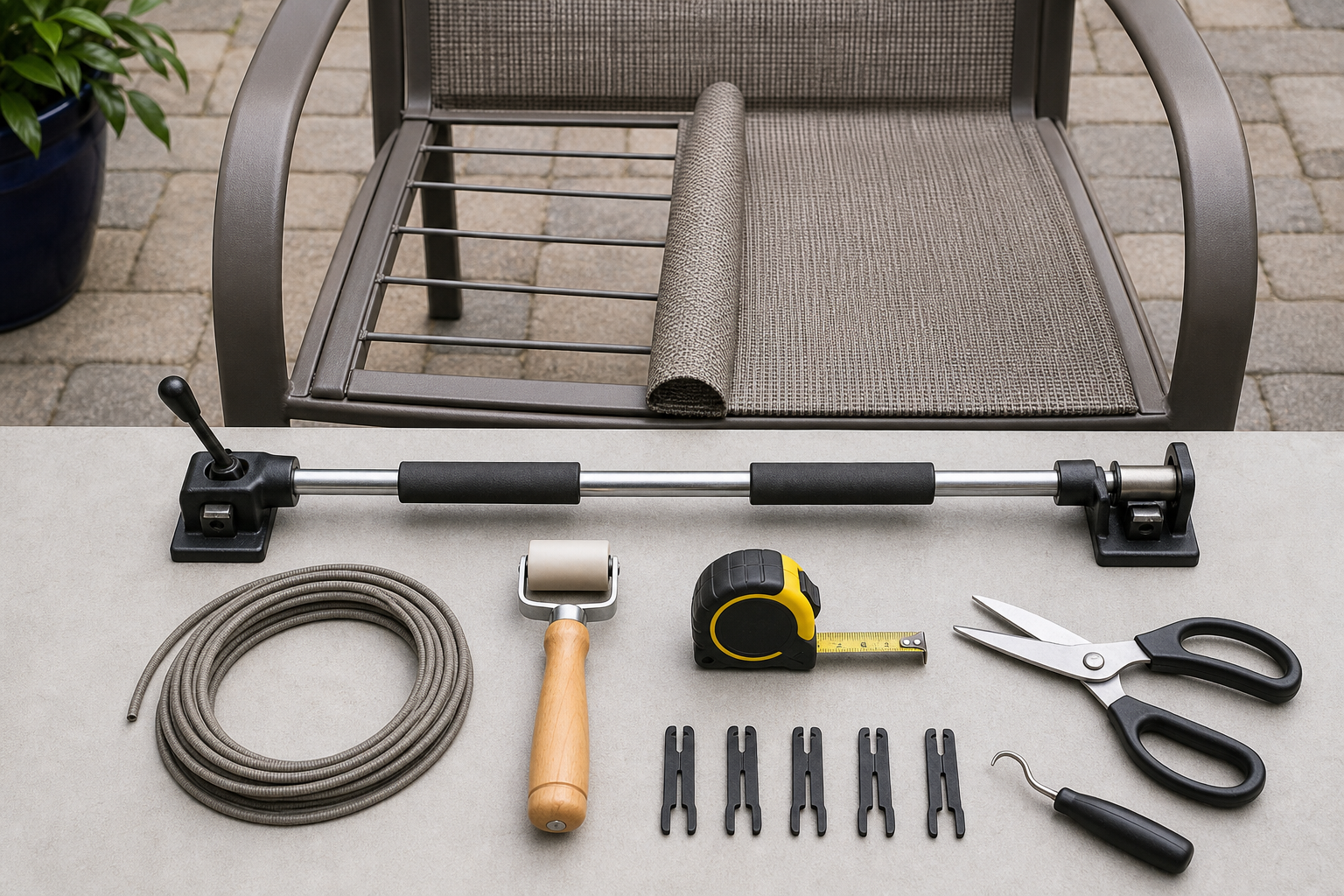
For a complete patio sling replacement, you’ll need several key Patio Sling Repair Tools. The most critical include a spline roller, a sling stretcher, a utility knife or heavy-duty scissors, a measuring tape, and a rubber mallet. These items cover the essential steps from preparation to final installation, making the process manageable for DIY enthusiasts.
Other helpful tools might include a screwdriver or pry tool for stubborn old spline, clamps to hold fabric in place, and a marking pen. Having these items on hand ensures you are prepared for any challenge that arises during the repair process, leading to a smoother experience.
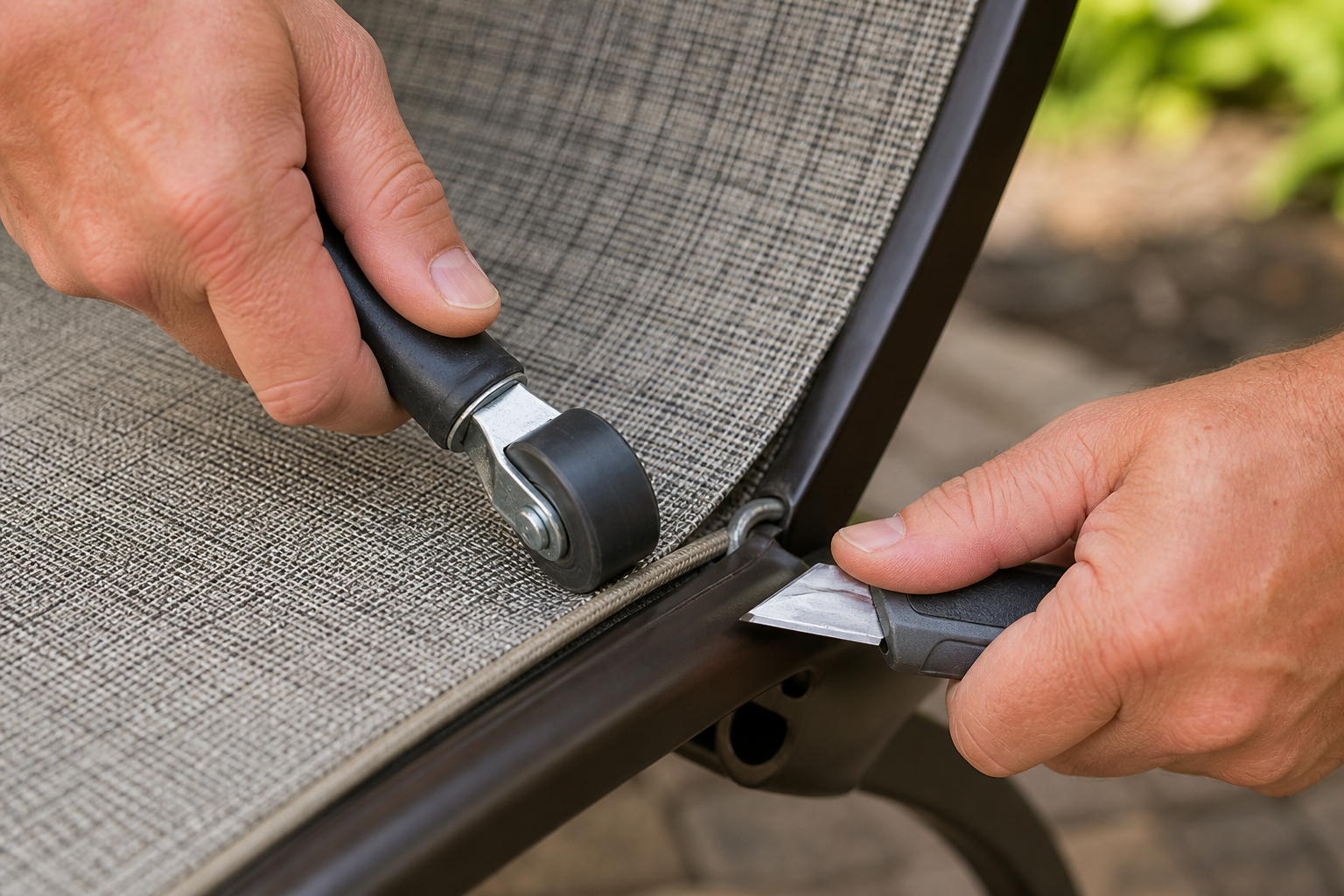
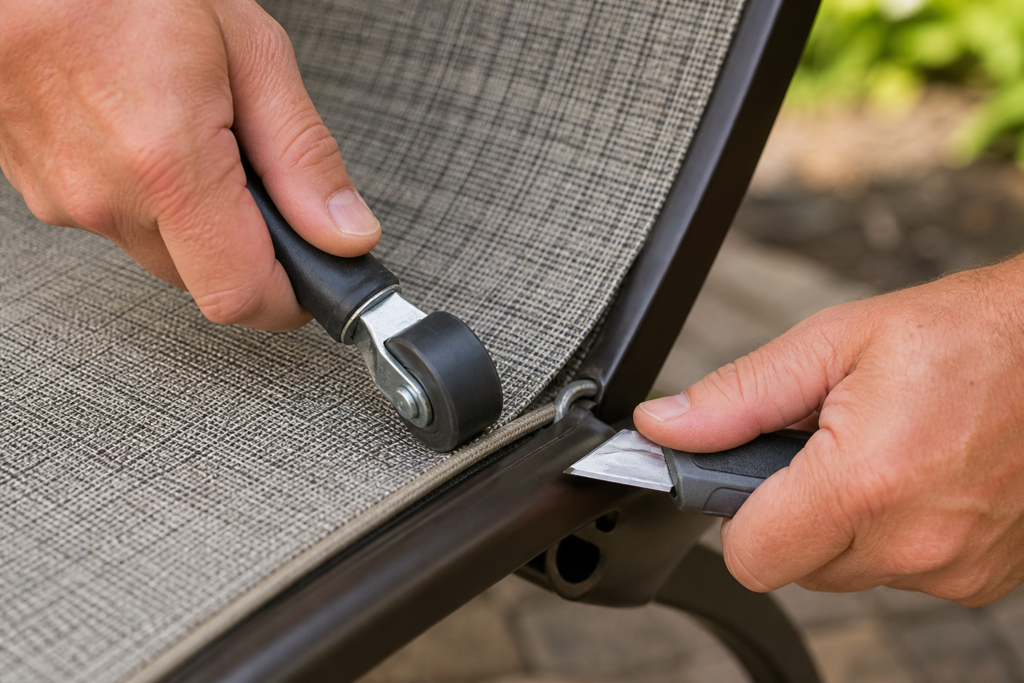
1. Spline Roller Tool: This is arguably the most important of all Patio Sling Repair Tools. It features a convex and concave wheel, designed to push the spline into the fabric channel of the patio chair frame. The convex side is typically used first to start the spline, and the concave side finishes the job, ensuring a tight, secure fit.
2. Sling Stretcher: Essential for achieving the correct tension, a sling stretcher pulls the new fabric taut across the frame. This tool is vital for preventing sagging and wrinkles, giving your repaired sling a professional, factory-finished look. Without it, getting the fabric tight enough can be nearly impossible.
3. Utility Knife or Heavy-Duty Scissors: A sharp cutting tool is necessary for precisely trimming old spline and cutting new sling fabric to size. Accuracy here prevents fraying and ensures a clean edge that fits perfectly into the frame’s channels. Always use a fresh blade for the best results.
4. Measuring Tape: Accurate measurements are paramount for ordering new fabric and spline, as well as for cutting the materials to fit. A flexible, durable measuring tape is one of the most basic yet crucial Patio Sling Repair Tools you’ll use throughout the process.
5. Rubber Mallet: Useful for gently tapping the frame or fabric into alignment without causing damage. It can also assist in seating stubborn spline or fabric edges, providing controlled force where needed.
6. Screwdriver or Pry Tool: Often needed to carefully remove old, brittle spline from the frame’s channels. A flathead screwdriver or a specialized pry tool can help lift the spline without scratching the frame.
7. Clamps: Small C-clamps or spring clamps can be invaluable for holding the new sling fabric in place while you work on one side, preventing it from shifting and ensuring alignment before spline insertion.
8. Marking Pen: A fabric marker or chalk pen is useful for marking cut lines on your new sling fabric, ensuring precision before you make any cuts. This helps prevent costly mistakes and wasted material.
Mastering Your Patio Sling Repair Tools
Understanding the function of each tool is one thing; mastering its use is another. Proper technique with your Patio Sling Repair Tools ensures not only a successful repair but also a durable and aesthetically pleasing outcome. Let’s delve into how to effectively wield these gadgets for optimal results.
Precision and patience are key when working with patio slings. Rushing the process or using tools incorrectly can lead to damaged fabric, loose slings, or even injury. Take your time to learn the nuances of each step and tool.
How to Use a Spline Roller Tool for Patio Sling Repair
The spline roller tool is central to securing your new sling fabric. After positioning the new fabric in the rail channel, place the spline over the fabric edge and into the groove. Use the convex wheel of the spline roller to gently push the spline and fabric into the channel, applying steady, even pressure. Work slowly along the entire length of the rail.
Once the spline is partially seated, switch to the concave wheel to fully embed it, creating a tight, flush finish. This technique ensures the fabric is firmly held, preventing it from pulling out over time. Mastering this particular one of the Patio Sling Repair Tools is crucial for a lasting repair.
The Purpose of a Sling Stretcher Tool in Patio Sling Repair
A sling stretcher tool is indispensable for achieving the necessary tension in your new sling fabric. After one side of the sling is installed with spline, the stretcher is used to pull the fabric extremely taut across the frame. This action eliminates any slack, wrinkles, or sagging before the second spline is inserted.
Proper tension is not just about aesthetics; it’s about the longevity and comfort of your patio chair. Without a sling stretcher, it’s nearly impossible to get the fabric tight enough by hand, which is why it’s one of the most valued Patio Sling Repair Tools in any kit. For detailed instructions on using specific tools, many online retailers and manufacturers provide video tutorials and guides.
Master Your DIY Project with the Right Patio Sling Repair Tools
Patio Chair Slings Guide empowers you with expert knowledge and detailed tutorials to confidently tackle any patio furniture restoration. Our comprehensive resources ensure you choose and use the best tools for lasting results.
How to Properly Cut and Install New Spline with Patio Sling Tools
Accurate cutting and installation of new spline are vital for a clean, secure finish. First, measure the length of the sling rail precisely and cut the new spline slightly longer than needed using your utility knife. This extra length allows for a perfect trim later.
With the fabric correctly positioned in the rail channel, use your spline roller to press the spline firmly into the groove, following the contours of the frame. Once fully seated, use the utility knife to carefully trim any excess spline flush with the rail ends. This creates a neat, professional look and prevents snagging.
Acquiring Your Patio Sling Repair Tools
Once you understand the importance and function of each tool, the next step is acquiring them. You have several options, from purchasing complete kits to buying individual items. The choice often depends on the scope of your project and your budget.
Whether you’re a seasoned DIYer or a first-timer, investing in quality Patio Sling Repair Tools will make a significant difference in the ease and success of your project. Let’s explore where and how to get your hands on these essential gadgets.
Where Can I Buy a Complete Patio Sling Repair Tool Kit Online?
Complete Patio Sling Repair Tools kits are readily available online from various retailers. Websites like Amazon, Home Depot, Lowe’s, and specialty outdoor furniture supply stores are excellent sources. These kits often include a spline roller, utility knife, measuring tape, and sometimes a sling stretcher, offering convenience and value.
Specialized online vendors, such as Patio Daddio or Patio Parts, often provide higher-quality, more durable tools designed for frequent use. Always check reviews and product descriptions to ensure the kit meets your specific needs and quality expectations.
What Are the Essential Tools Included in a Professional Patio Sling Repair Kit?
A professional Patio Sling Repair Tools kit typically includes more robust and specialized items than a basic DIY set. Expect to find a heavy-duty spline roller with multiple wheel options, a sturdy sling stretcher, precise utility shears, a high-quality measuring tape, and a rubber mallet. These kits are built for durability and efficiency, often favored by those who undertake multiple repair projects.
They might also include various sizes of spline material, specialized clamps, and even a heat gun for softening old spline or fabric. The investment in professional-grade Patio Sling Repair Tools is justified by their longevity and superior performance.
Is It Possible to Buy Individual Patio Sling Repair Tools or Only Kits?
Yes, it is absolutely possible to buy individual Patio Sling Repair Tools. This is ideal if you only need to replace a lost tool, upgrade a specific item, or if you already have some basic tools on hand. Most online retailers and hardware stores sell spline rollers, utility knives, and measuring tapes separately.
Specialized items like sling stretchers might be easier to find through dedicated patio furniture supply websites. Buying individual tools allows for customization of your kit, ensuring you only purchase what you truly need.
How Much Does a Typical Set of Patio Sling Repair Tools Cost?
The cost of a typical set of Patio Sling Repair Tools can vary significantly. Basic kits, often found at general hardware stores or online marketplaces, might range from $30 to $60. These usually include a spline roller, utility knife, and measuring tape.
More comprehensive or professional-grade kits, especially those including a high-quality sling stretcher, can range from $70 to $150 or more. The investment is generally worthwhile for the quality and ease of use they provide. Consider the frequency of your repair projects when budgeting for these tools.
Can I Rent Patio Sling Repair Tools Instead of Buying Them?
Renting specialized Patio Sling Repair Tools like a sling stretcher might be an option, though it’s less common than renting larger construction equipment. Some local hardware stores or tool rental centers might offer them, especially in areas with high demand for outdoor furniture repair.
However, given the relatively affordable cost of most kits, purchasing them for a one-time or occasional project often proves more convenient and cost-effective in the long run. Always check with your local rental options to see what’s available.
What Features Should I Look for When Buying Patio Sling Removal Tools?
When selecting Patio Sling Repair Tools, especially for removal, look for durability and ergonomic design. For spline removal, a utility knife with a comfortable grip and a sturdy blade lock is essential. A pry tool or screwdriver with a thin, strong tip will help extract old spline without damaging the frame.
For cutting fabric, consider heavy-duty scissors with sharp, long blades for clean, straight cuts. These features ensure safety, efficiency, and prevent unnecessary strain during the removal process. Quality tools make the initial, often challenging, step much smoother.
Are There Any Alternative Tools I Can Use for Patio Sling Repair If I Don’t Have Specialized Ones?
While specialized Patio Sling Repair Tools are highly recommended for the best results, some alternatives can be used in a pinch. For a spline roller, a blunt, rounded object like the handle of a screwdriver might work, but it won’t be as efficient or precise. For stretching, strong clamps and a second person can help, but it’s much harder to achieve even tension.
A sharp box cutter can substitute for a utility knife, and household scissors for heavy-duty ones. However, these alternatives often require more effort, increase the risk of errors, and may not yield the same professional finish. Investing in the correct tools is always the superior choice.
Avoiding Common Mistakes with Patio Sling Repair Tools
Even with the best Patio Sling Repair Tools, mistakes can happen. Awareness of common pitfalls can save you time, frustration, and money. Precision and attention to detail are your greatest allies in any DIY repair project.
By understanding what to avoid, you can approach your patio sling repair with greater confidence and ensure a successful outcome. Let’s look at some frequent errors and how to sidestep them.
What Are Common Mistakes to Avoid When Using Patio Sling Repair Tools?
One common mistake is not stretching the fabric enough. This leads to a saggy, unprofessional-looking sling that won’t provide proper support. Always use your sling stretcher to achieve maximum tension. Another error is using the wrong size spline; too small, and it won’t hold; too large, and it won’t fit. Always measure your existing spline or frame channel.
Not fully seating the spline with the spline roller is another frequent issue, causing the fabric to eventually pull out. Lastly, cutting the fabric too short is irreversible. Always measure twice and cut once, leaving a little extra if unsure. These oversights can undermine the entire repair, making your investment in Patio Sling Repair Tools less effective.
What specific tools are required for patio sling replacement?
For a successful patio sling replacement, essential tools include a spline roller, a sling stretcher, a utility knife or sharp scissors, a measuring tape, and possibly a rubber mallet. These patio sling repair tools ensure precise cuts, proper tension, and secure spline installation.
How do you use a spline roller tool for patio sling repair?
A spline roller tool is used to seat the new spline into the sling rail channel, securing the fabric. First, align the new sling fabric in the rail, then place the spline over the fabric edge and into the channel. Use the convex wheel of the spline roller to gently push the spline and fabric firmly into the groove, working slowly and evenly along the entire rail.
Why are specialized tools recommended for repairing patio chair slings?
Specialized patio sling repair tools, such as sling stretchers and spline rollers, are recommended because they provide the leverage and precision needed for a professional-looking repair. They ensure the fabric is taut, the spline is properly seated, and the chair’s structural integrity is maintained, preventing common DIY mistakes.
What is the purpose of a sling stretcher tool in patio furniture repair?
A sling stretcher tool is crucial for patio furniture repair to achieve the necessary tension in the new sling fabric. After one side of the sling is installed, the stretcher is used to pull the fabric extremely tight across the frame, allowing the second spline to be inserted without wrinkles or sagging.
How much does a typical set of patio sling repair tools cost?
The cost of a typical set of patio sling repair tools can vary widely, generally ranging from $30 to $100. Basic kits usually include a spline roller and a utility knife, while more comprehensive sets might add a sling stretcher, measuring tools, and extra spline, offering greater value for serious DIYers.
What are the essential tools included in a professional patio sling repair kit?
A professional patio sling repair kit typically includes a robust spline roller with multiple wheel options, a heavy-duty sling stretcher, a precise utility knife or shears, a measuring tape, a rubber mallet, and various sizes of spline. These patio sling repair tools are designed for efficiency and durability.
How do you properly cut and install new spline with patio sling tools?
To properly cut and install new spline, first measure the length of the sling rail and cut the spline slightly longer than needed using a utility knife. Then, with the fabric in place, use the spline roller to press the spline into the rail channel firmly. Trim any excess spline flush with the rail ends for a clean finish.
What are common mistakes to avoid when using patio sling repair tools?
Common mistakes include not stretching the fabric enough, using the wrong size spline, not fully seating the spline with the spline roller, and cutting the fabric too short. Always double-check measurements and ensure each step with your patio sling repair tools is performed with precision.
Your Guide to Flawless Patio Sling Repair
Restoring your patio furniture with new slings is a rewarding project that significantly extends the life and aesthetic appeal of your outdoor pieces. By understanding and utilizing the correct Patio Sling Repair Tools, you empower yourself to achieve professional-grade results right in your own backyard. From the indispensable spline roller to the tension-creating sling stretcher, each tool plays a vital role in ensuring a durable and beautiful finish.
Remember that precision in measurement, careful handling of materials, and patience in execution are just as important as the tools themselves. With this comprehensive guide, you are well-equipped to tackle any patio sling repair project with confidence. Embrace the satisfaction of transforming your outdoor living space, one perfectly repaired sling at a time. For more in-depth guides and tips, explore our resources at Patio Chair Slings Guide.