When you’re looking to restore your beloved patio chairs, understanding the right Sling Frame Material is paramount for a successful and lasting repair. Many homeowners face the challenge of worn-out slings, but the true foundation of a perfect restoration lies in recognizing the frame’s composition and ensuring compatibility with new materials.
This guide will walk you through 5 critical compatibility checks, empowering you to confidently undertake DIY repairs and ensure your outdoor furniture remains beautiful and functional for years to come.
Key Takeaways
- Identify common sling frame materials like aluminum and steel to ensure proper repair techniques and material selection.
- Prioritize frame material durability and longevity to make informed choices that extend the life of your patio chairs.
- Consider environmental factors, especially in coastal areas like Coral Springs, FL, when selecting repair materials for optimal resistance.
- Understand the distinct advantages and disadvantages of steel versus aluminum frames for effective repair planning.
- Match your sling repair and ongoing maintenance strategies to the specific needs of your chair’s frame material.
Understanding Common Sling Frame Materials for Repair
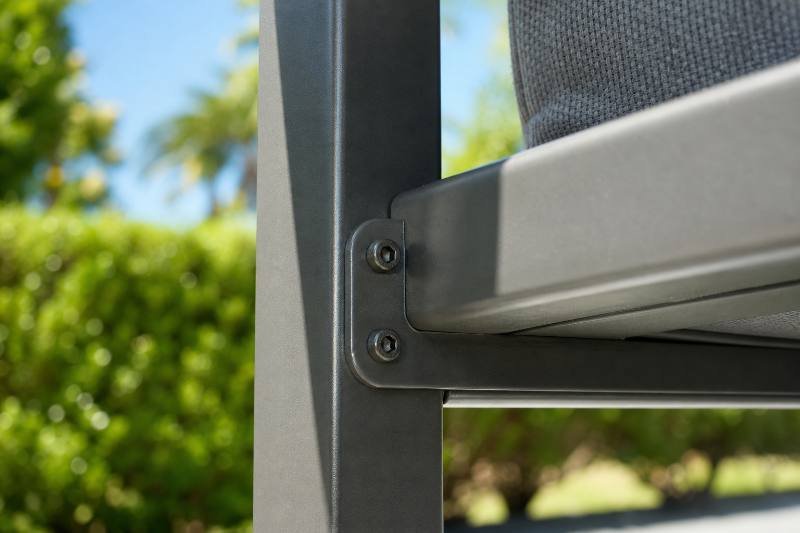
Before embarking on any patio chair restoration, identifying the existing Sling Frame Material is the crucial first step. The most prevalent materials you’ll encounter are aluminum, steel, and occasionally, more specialized options like marine-grade polymer or composite. Each material possesses unique properties that dictate how it should be handled during repair and what replacement components will be most compatible. Knowing your frame type ensures you select the correct tools and techniques.
Aluminum frames are typically lightweight and naturally resistant to rust, making them a popular choice for outdoor furniture. Steel frames, on the other hand, are heavier and offer exceptional strength, though they usually require a protective powder-coating to prevent corrosion. Marine-grade polymers are often found in high-end or specialized outdoor settings, prized for their extreme weather resistance.
Patio Chair Slings Guide specializes in educating homeowners on accurate measurement for frames, sling rails, and replacement materials. Our resources help you confidently identify your existing frame material, whether it’s a sleek aluminum design or a sturdy steel structure. This foundational knowledge ensures you choose the correct replacement slings and hardware for a perfect fit, preventing common DIY repair frustrations.
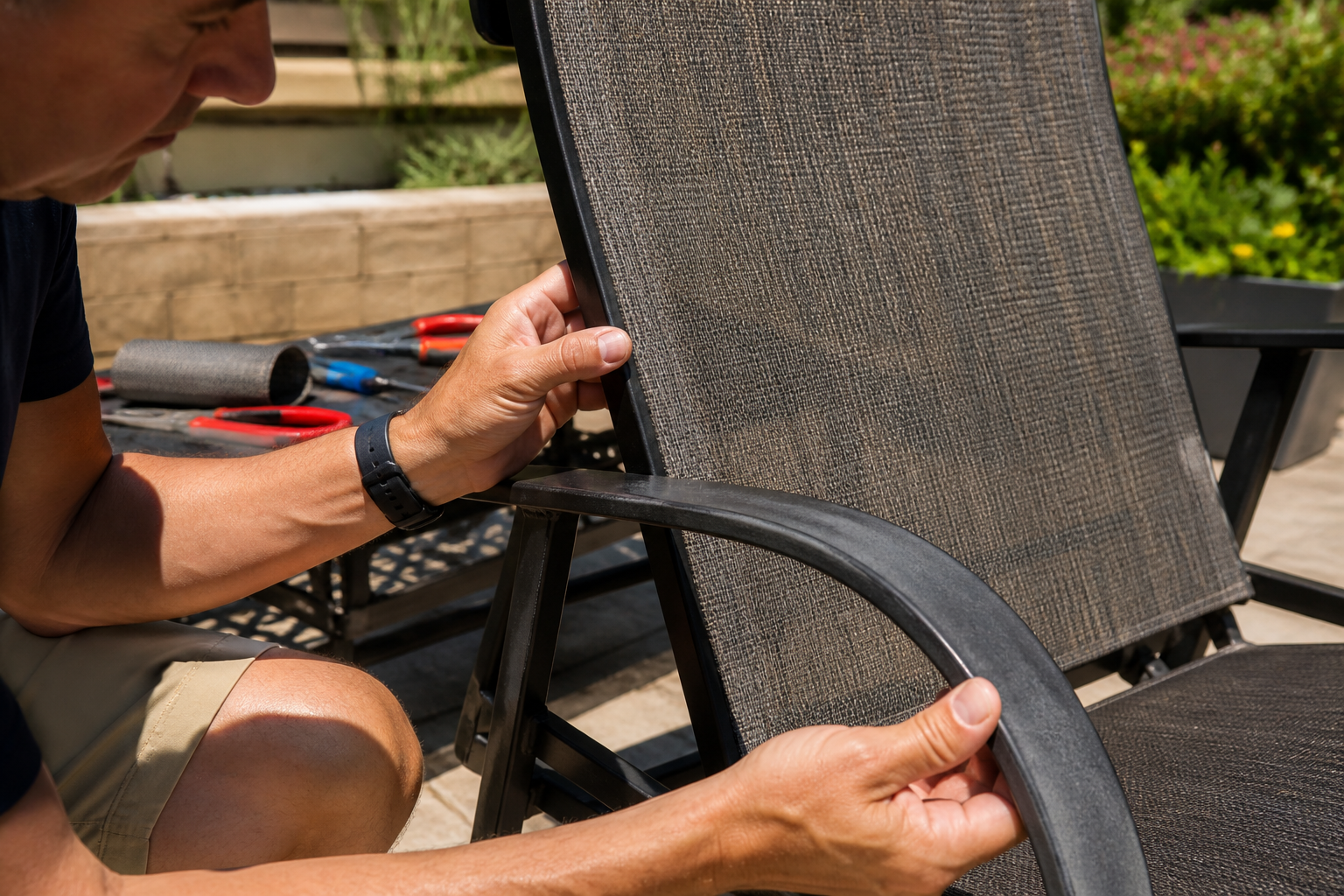
Durability and Longevity: Choosing the Right Sling Frame Material for Lasting Repairs
The long-term success of your patio chair repair hinges significantly on the durability and longevity of the Sling Frame Material. Selecting the right material for your replacement slings and understanding how it interacts with the frame is essential for extending the life of your outdoor furniture. A well-chosen material ensures your chairs withstand the elements and frequent use, providing comfort for many seasons to come.
Aluminum frames, especially those with a quality powder-coat finish, offer excellent resistance to rust and corrosion, contributing to a longer lifespan. Steel frames, while robust, depend heavily on their protective coatings to prevent rust, which can compromise structural integrity over time if chipped or scratched. When planning your repair, consider the expected lifespan of the frame itself.
Patio Chair Slings Guide offers expert advice on selecting durable and suitable sling fabrics that complement your frame’s inherent longevity. We help you compare various materials, textures, and colors, always considering factors like weather resistance and airflow. Our guidance ensures that your new slings are not only aesthetically pleasing but also engineered to last, maximizing your investment in DIY restoration.
Coastal Climates and Aluminum Frames: A Smart Choice for Sling Repair Compatibility
For homeowners in regions with specific environmental challenges, such as coastal climates, the choice of Sling Frame Material is a critical compatibility check. Salt air, high humidity, and intense sun can accelerate wear and tear on outdoor furniture, making material selection even more important for successful repairs. Understanding these regional challenges directly informs the best approach to restoration.
Aluminum frames are particularly advantageous in coastal areas due to their natural resistance to rust and corrosion. Unlike steel, aluminum does not contain iron, meaning it won’t rust when exposed to saltwater and moisture. This inherent property makes it an ideal material for patio chairs in environments like Coral Springs, FL, where outdoor furniture faces constant exposure to humid, salty air.
When repairing chairs in such conditions, ensuring your replacement slings and hardware are also designed for marine environments will prevent premature deterioration. Patio Chair Slings Guide highlights how understanding these regional challenges, especially for those in places like Coral Springs, FL, informs the choice of repair materials. We guide you toward solutions that protect your investment and ensure your restored chairs thrive outdoors.
Ready to Master Your Patio Sling Chair Repairs?
Patio Chair Slings Guide empowers homeowners with expert resources and step-by-step instructions to confidently restore their outdoor furniture, ensuring a perfect fit and lasting beauty.
Steel vs. Aluminum: Key Compatibility Factors for Your Sling Frame Repair
When approaching a patio chair repair, understanding the distinct characteristics of steel versus aluminum Sling Frame Material is crucial for making informed decisions. Each material presents unique advantages and disadvantages that directly impact repair methods, durability, and overall chair performance. Knowing these differences ensures you select the right replacement parts and apply appropriate care.
Steel frames are renowned for their strength and stability, often providing a heavier, more robust feel to patio furniture. However, steel is susceptible to rust, necessitating a high-quality powder-coating for protection. If this coating is compromised, rust can quickly spread, requiring prompt attention during repair. Aluminum frames, conversely, are lighter and naturally rust-resistant, making them easier to move and maintain.
Here’s a comparison of key factors for steel and aluminum sling frame materials:
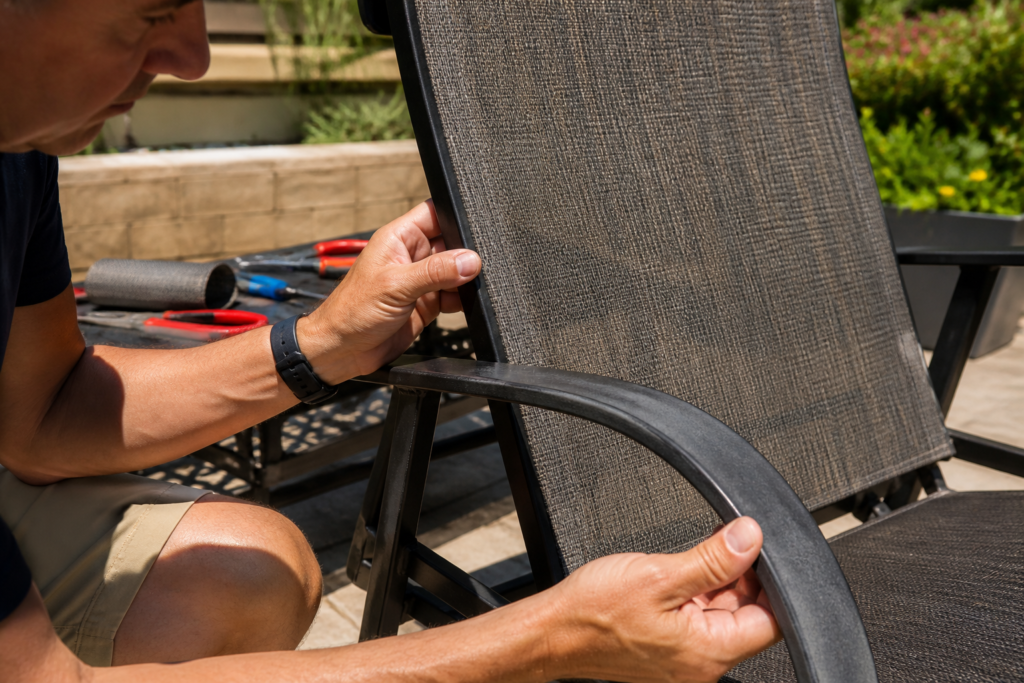
Patio Chair Slings Guide’s step-by-step tutorials can guide users through specific repair steps for both steel and aluminum frames. Whether you’re dealing with a rusty steel frame that needs careful preparation or simply replacing a sling on a sturdy aluminum structure, our resources provide the detailed instructions you need for a successful outcome. For more insights into material science, you can explore resources like ScienceDirect’s overview of aluminum alloys.
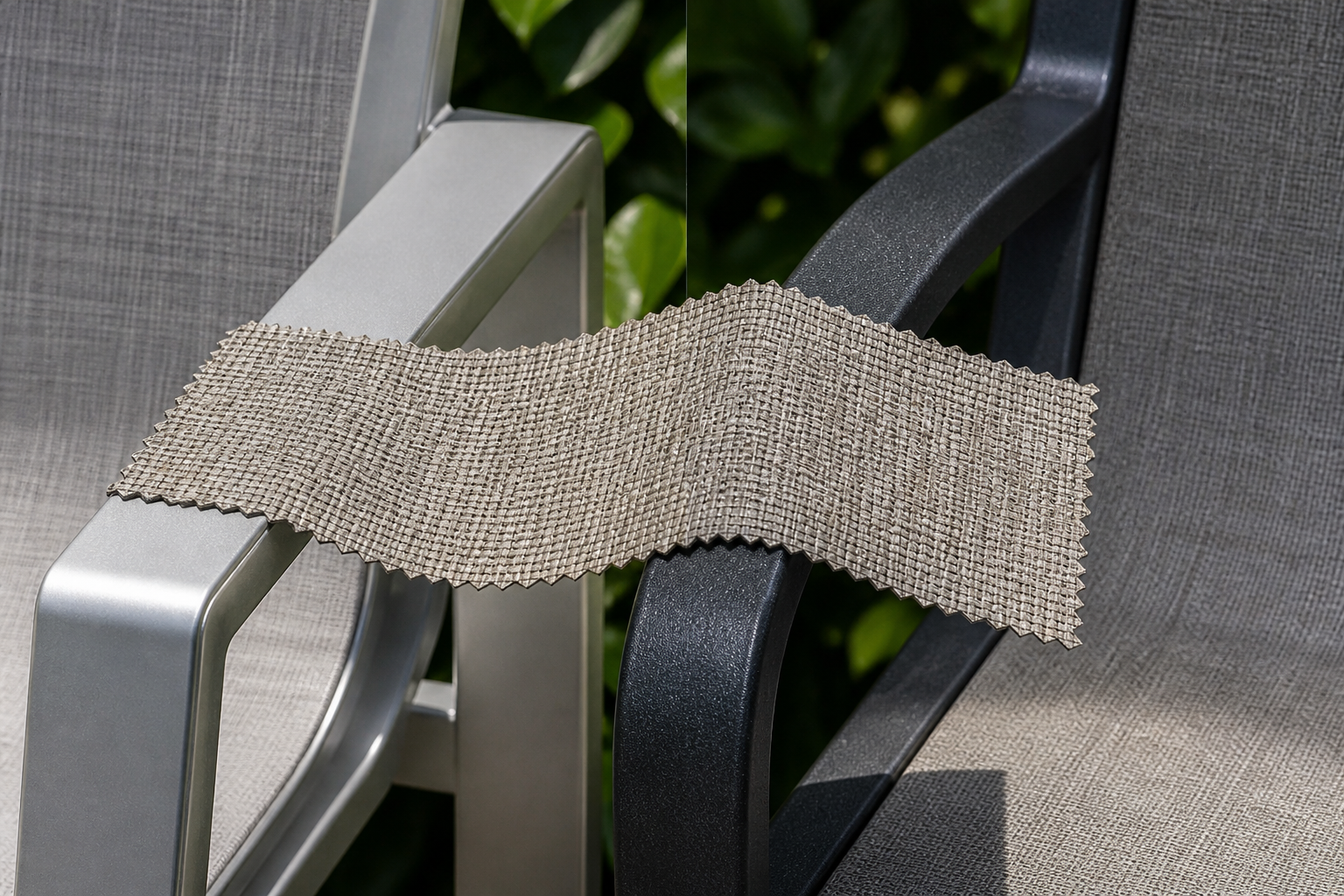
Maintenance Matters: Matching Your Sling Repair to Frame Material Needs
The long-term success of your patio chair repair isn’t just about the initial fix; it’s also about ongoing maintenance tailored to your Sling Frame Material. Different frame materials have varying care requirements, and aligning your maintenance routine with these needs is crucial for preserving your investment and extending the life of your outdoor furniture. Proper upkeep prevents future damage and keeps your chairs looking their best.
Aluminum frames are relatively low-maintenance, typically requiring only regular cleaning with mild soap and water to remove dirt and grime. Their inherent rust resistance means you won’t need to worry about corrosion, though inspecting for any structural damage or loose bolts is always a good practice. Steel frames, however, demand more vigilant attention.
For steel frames, it’s essential to regularly inspect the powder-coating for any chips, scratches, or signs of rust. Promptly addressing these issues with touch-up paint or rust-inhibiting primers can prevent further corrosion and maintain the frame’s integrity. Neglecting these small repairs can lead to significant structural damage over time, undermining the effort of your sling replacement.
Patio Chair Slings Guide connects this understanding to our comprehensive guides on general patio furniture maintenance. We empower you with the knowledge to protect your investment by making informed decisions about care routines. By matching your maintenance efforts to your frame material, you ensure your repaired chairs remain comfortable, functional, and aesthetically pleasing for years to come.
Ensuring the right Sling Frame Material compatibility is the cornerstone of any successful patio chair restoration. By understanding the unique properties of different frame types, considering environmental factors, and committing to proper maintenance, you can achieve lasting repairs that enhance your outdoor living space. Patio Chair Slings Guide provides the practical guides and resources you need to confidently tackle these DIY projects, improving comfort and refreshing the aesthetic of your outdoor areas.
Ready to confidently restore your outdoor chairs? Visit Patio Chair Slings Guide for detailed tutorials, accurate measurement instructions, and expert advice on selecting the perfect replacement materials for your specific Sling Frame Material.